
How Much Water Does a Pig Need per Day?
Water is essential for pig growth, feed intake, digestion, and overall health. Pigs that do not receive enough clean water may eat less, grow more slowly, and experience reduced production performance. However, daily water requirements vary depending on body weight, age, temperature, feed, and reproductive stage. For pig farmers, understanding these requirements and choosing suitable pig water drinkers are important parts of daily farm management.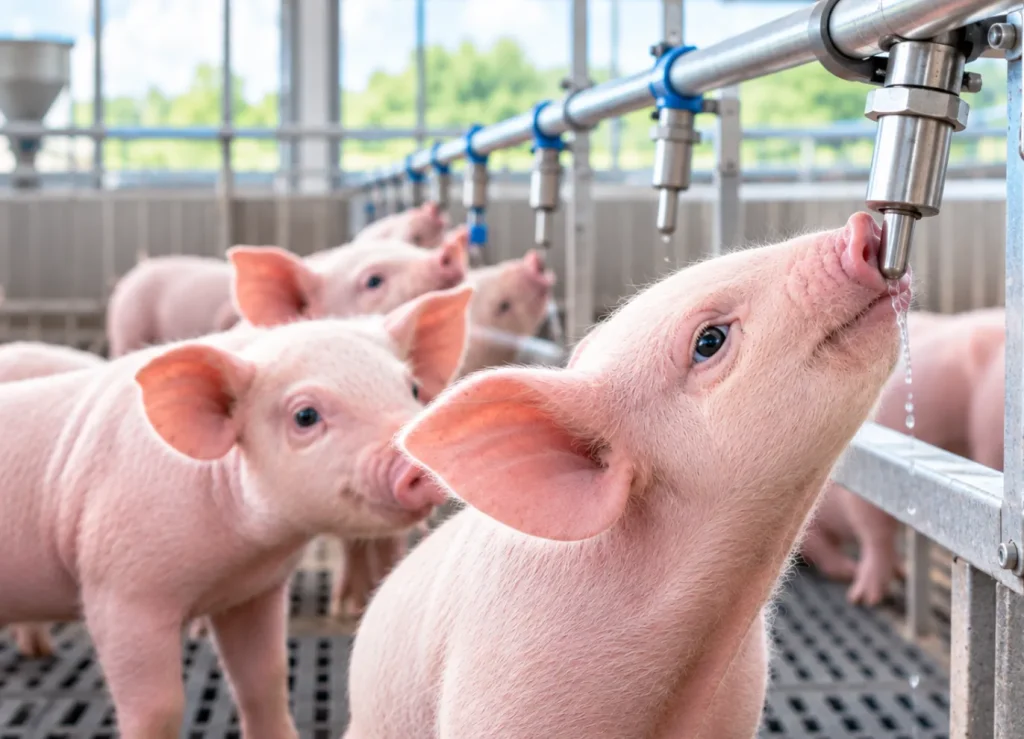
How Much Water Do Pigs Need Daily?
The amount of water a pig needs increases as it grows. Lactating sows generally require much more water than growing pigs because milk production uses a large amount of fluid. The following figures are practical estimates for daily water consumption, not fixed limits. Pig Category Approximate Daily Water IntakeNewly weaned piglets 1–1.5 L
Pigs up to 20 kg 1.5–2 L
Growing pigs, 20–40 kg 2–5 L
Finishing pigs 5–6 L
Gestating sows 5–8 L
Lactating sows 15–30 L
Adult boars 5–8 L Actual intake can be higher in hot weather or under certain feeding conditions. Lactating sows need particular attention because insufficient water may affect milk production and piglet growth. Farmers should monitor water consumption alongside feed intake rather than relying on a single daily target.
What Affects Water Consumption in Pigs?
Body weight and production stage are two of the main factors affecting water requirements. Larger pigs generally drink more than smaller pigs, while lactating sows need additional water to support milk production. Environmental temperature also matters: pigs may drink more during hot weather, especially when ventilation is poor or housing conditions increase heat stress.Feed composition can influence water intake as well. Dry feed generally requires pigs to drink more water than liquid feeding systems. Health problems, changes in diet, water quality, and competition at the drinker can also affect drinking behavior. If pigs suddenly drink less than usual, check for blocked drinkers, low water pressure, poor water quality, or possible health issues.
How Pig Nipple Drinkers Affect Water Intake
A reliable drinking system helps pigs access clean water throughout the day. Pig nipple drinkers are widely used in commercial farms because they provide water on demand and can help reduce contamination when properly installed and maintained. Depending on the farm's needs, common options include standard pig drinking nipples, duckbill-style drinkers, and splash-reducing designs.The drinker's flow rate and installation height are particularly important. If the flow is too low, pigs may spend more time drinking and struggle to meet their needs. If it is too high, water may be wasted through splashing. As a general reference, newly weaned piglets may need a flow rate of around 0.3 L/min, pigs up to 20 kg around 0.5–1.0 L/min, growing and finishing pigs around 1.0–1.5 L/min, and adult sows around 2.0 L/min. These figures are guidelines rather than universal settings; follow local recommendations and adjust according to pig size, drinker design, and actual water use.
Installation height should also allow pigs to drink comfortably without excessive stretching or awkward positioning. Check each nipple regularly to make sure it operates correctly, and clean filters and water lines as needed. When selecting pig nipple drinkers, consider material durability, water flow, ease of cleaning, and compatibility with the farm's water supply.
How to Monitor Water Intake on a Pig Farm
Monitoring water use can help farmers identify problems before they affect production. Record daily water consumption where practical and compare it with feed intake, temperature, and the pigs' growth stage. A sudden change in water use may indicate a supply problem, a leak, a change in feed, or a health issue.Regularly inspect pig water drinkers for leaks, blockages, damaged fittings, and inconsistent flow. Make sure all pigs can reach a functioning drinker and that there is enough drinking access to prevent competition. Water should be clean, fresh, and available throughout the day. During hot weather, pay extra attention to water supply and flow capacity.
Final Thoughts
The amount of water a pig needs per day depends on its weight, age, environment, and production stage. Growing pigs generally require less water than adult sows, while lactating sows have particularly high demands. Providing clean water is only part of the job; a well-designed drinking system and regular equipment checks are also essential. Choosing suitable pig water drinkers and maintaining the correct flow rate can help support healthy pigs, stable feed intake, and efficient farm management.Get the best quote and sample information.
Fill out the form to get sample information or inquire for more information.