

Common Mistakes When Using Livestock Marking Spray on Farms
Livestock marking spray is widely used on cattle, pigs and other farm animals for identification, breeding management, sorting, treatment records and heat detection. It looks simple to use, but poor application can make a clear mark fade quickly, become difficult to read, or give misleading information. A few small changes in how the spray is applied can make a noticeable difference.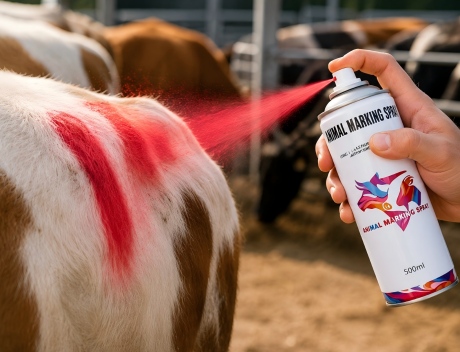
Spraying Too Close to the Animal
One of the most common mistakes is holding the aerosol can too close to the animal. This can cause excessive paint to build up in one area instead of creating an even mark.Most livestock marking spray products recommend a specific spraying distance. Depending on the product and application, this is often around 4–10 inches (10–25 cm). The exact distance should always follow the manufacturer's instructions.
Keeping the can moving while spraying is also important. A steady movement produces a more consistent line and reduces heavy spots that may take longer to dry.
Marking Dirty or Wet Hair
Livestock marking paint works best when the marking area is reasonably clean. Mud, manure, loose hair and heavy dust can prevent the paint from contacting the hair properly.For cattle used in heat detection, the tailhead should receive particular attention. Loose hair and dirt should be removed before applying the paint. If the surface is heavily contaminated, the mark may look uneven and can disappear sooner than expected.
This does not mean every animal needs to be washed before marking. In normal farm conditions, removing obvious dirt and loose hair is usually enough.
Using Too Much Paint
More paint does not always mean a better mark.Applying a thick layer can create a heavy patch that takes longer to dry and may be difficult to interpret. This is especially important when livestock marking spray is being used for heat detection. The purpose is not simply to create a large colored area, but to create a mark that can be visibly rubbed or broken when the animal is mounted.
For general identification, numbers, letters or symbols should be clear without excessive overspray.
Not Shaking the Can Properly
Pigment and other ingredients inside an aerosol can need to be mixed before spraying. Skipping this step can result in weaker color, inconsistent coverage or changes in spray performance.Many livestock marking paint instructions recommend shaking the can vigorously before use and continuing to agitate it periodically during application.
If several animals are being marked in succession, do not assume that one shake at the beginning is always enough. Follow the instructions for the specific product.
Ignoring Temperature and Weather Conditions
Weather can have a direct effect on drying and marking performance.Some livestock marking spray products recommend using them within a specific temperature and humidity range. Cold conditions can affect spray delivery and drying, while unsuitable weather may influence how quickly the mark becomes usable.Rain is another consideration. Some products are designed to resist moisture after drying, but this does not mean freshly applied paint should be exposed to heavy rain immediately.When possible, apply the marking spray under conditions recommended on the product label.
Using the Wrong Marking Location
The correct marking location depends on the purpose.For general identification, the back, side or flank may provide a larger visible surface.For heat detection in dairy cattle, paint is commonly applied around the tailhead because rubbing in this area can provide useful information about mounting activity.
Using the same marking method for every task can reduce the value of the information. Before spraying, decide what the mark is supposed to tell you and choose the location accordingly.
Forgetting to Clean the Spray Tip
A partially blocked nozzle can change the spray pattern and make the next application uneven.After use, many aerosol livestock marking paints recommend clearing the valve or spray tip according to the manufacturer's instructions. This small step can help maintain a consistent spray pattern and reduce problems during the next use.Never try to clear a pressurized aerosol opening with a pin or other sharp object. Follow the product's cleaning instructions instead.
A Better Way to Use Livestock Marking Spray
Good marking does not require complicated equipment. Start with a reasonably clean marking area, shake the can properly, maintain the recommended spraying distance and keep the can moving during application. Use enough paint to create a clear mark without unnecessary buildup.For breeding or heat-detection programs, inspect the marks regularly and record changes rather than relying on memory. For general herd management, use consistent colors, symbols or marking locations so that workers can understand the system quickly.
The best livestock marking spray is not simply the one with the brightest color. The application method, animal condition, weather, marking purpose and product formulation all influence the final result. Avoiding these common mistakes can make livestock identification clearer, reduce wasted paint and make daily herd management more reliable.
Get the best quote and sample information.

Fill out the form to get sample information or inquire for more information.